
SUMMER INTERNSHIPS
COMPLETE TRAINING ON TECHNOLOGY

-
Sub Title
MACHINE LEARNING
Machine learning is an application of artificial intelligence (AI) that provides systems the ability to automatically learn and improve from experience without being explicitly programmed. Machine learning focuses on the development of computer programs that can access data and use it to learn for themselves. The process of learning begins with observations of data, such as examples, direct experience, or instruction, in order to look for patterns in data and make better decisions in the future based on the examples that we provide. The primary aim is to allow the computers to learn automatically without human intervention or assistance and adjust actions accordingly.

-
Artificial Intelligence
AI is the simulation of the processes of human intelligence by machines, particularly computer systems. It is an area of computer science which emphasises on the creation or formation of intelligent machines that react and work like human beings.

-
Sub Title
Deep Learning
Deep learning is an artificial intelligence function that imitates the workings of the human brain in processing data and creating patterns for use in decision making. Deep learning is a subset of machine learning in artificial intelligence (AI) that has networks capable of learning unsupervised from data that is unstructured or unlabeled.

-
Python
Python is arguably the easiest language to start real programming and Django is the most popular web framework for Python. Together they form a deadly combination which helps you build smart web applications quickly and elegantly. Its ease of use and quick development turnaround has made these technologies a darling of Silicon Valley Entrepreneurs.

-
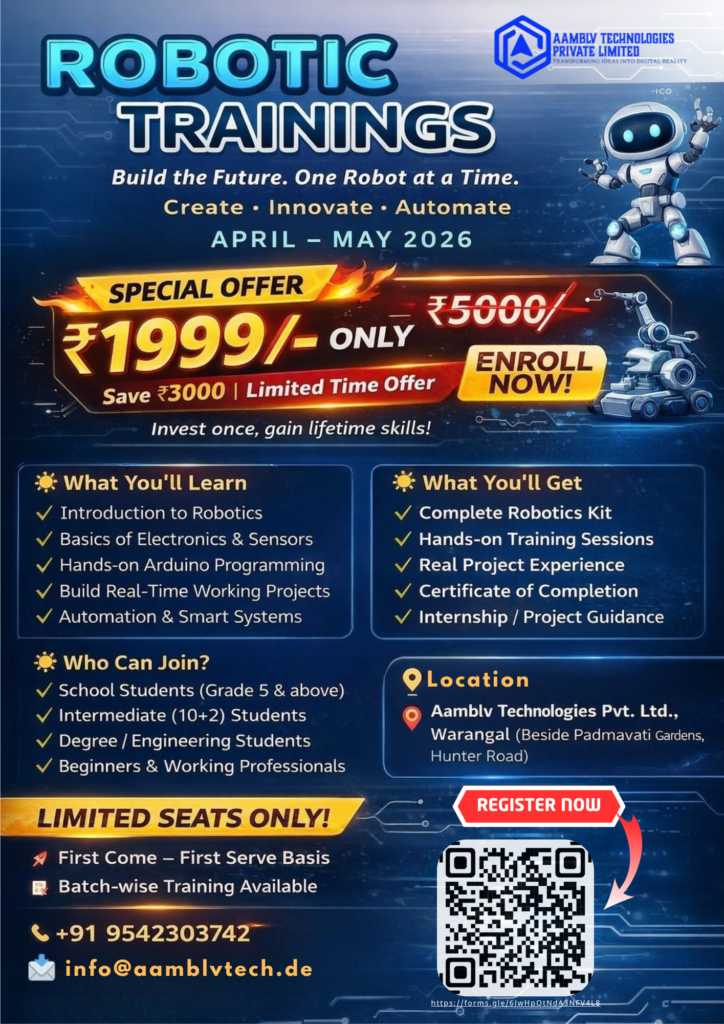
ROBOTICS
Robotics is a field of technology that focuses on designing, building, and programming robots to perform tasks automatically.
It combines mechanical engineering, electronics, and computer programming to create machines that can assist humans in industries, healthcare, and daily life.
-
Java
achine learning is an application of artificial intelligence (AI) that provides systems the ability to automatically learn and improve from experience without being explicitly programmed. Machine learning focuses on the development of computer programs that can access data and use it to learn for themselves.




About Summer Internship
We have all reached a stage where completing a Summer Internship is essential to gain practical experience in the field we want to build our careers in. ATPL Projects focuses on providing students with the best technical and professional skills to prepare them for their future careers. Students across various domains such as Engineering, Finance, Marketing, Aeronautics, and Information Technology actively search for internship opportunities that help them develop their skills and gain a better understanding of their chosen field.
With the rapid growth of digital technology, students now have access to some of the best Online Summer Internship Trainings, making learning more flexible and convenient. ATPL Projects offers a wide range of Summer Internship Programs designed to help students gain real-time experience. Our organization provides both offline internships at our institute and online internship programs, giving students the flexibility to learn from anywhere.
In our Student Summer Internship Program, you will be guided and trained by experienced professionals who ensure that you gain both conceptual knowledge and practical skills. Students can select a specific domain and work towards mastering it with the help of mentors who continuously monitor and guide their progress.
If you are looking for Summer Internships for 3rd year students, ATPL Projects is the right place for you. Our goal is to provide high-quality internship opportunities that help students achieve their career objectives. Our internship programs combine theoretical knowledge with practical implementation, enabling students to strengthen their technical skills.
Every year, ATPL Projects organizes Summer Internship Training in a structured and well-planned manner. Dedicated mentors are assigned to students who assist them throughout the entire internship period. One of our most popular programs is the IT Summer Internship, where students are trained in the latest technologies and tools used in major industries.
We welcome students to begin their professional journey with us through our Summer Internship Openings. Our Online Summer Internship with Certificate provides updated learning materials, real-time project experience, and expert guidance. The certification obtained after completing the internship can significantly enhance your resume and improve your chances of securing full-time employment with reputable companies.
For students interested in Software Engineering Summer Internships, our program focuses on important concepts such as Data Structures, Core Programming, Software Development Life Cycle (SDLC), and application development. These skills are extremely valuable during technical interviews and job placements.
One of the major advantages of the Virtual Summer Internship at ATPL Projects is flexibility. Students can schedule their learning sessions according to their convenience without the need to travel long distances. Summer training is extremely important for students as it helps them prepare for opportunities in service-based and product-based companies.
Our internship programs also help students identify their strengths, interests, and career goals. Students who complete the Summer Internship for 3rd year students gain practical exposure to industry-related concepts and stand out during campus placements. Similarly, Summer Internships for Final Year Students provide valuable experience that helps them transition smoothly into professional roles.
The Final Year Summer Internship Program at ATPL Projects is designed to help students explore different industries and identify the areas where their interests and skills align. Along with offline training, we also offer Online Summer Internship Courses with Certification, which add significant value to a student’s resume when applying for jobs or higher education.
Internship opportunities are extremely important in today’s competitive environment. Many colleges require students to complete internships to obtain academic credits during their final year. By joining the ATPL Projects Internship Program, students can gain those credits while also receiving high-quality training and industry exposure.
Our experienced mentors guide students through every step of the learning process. For example, in our Software Development Internship, students learn about the complete Software Development Life Cycle (SDLC), enabling them to understand how real-world software applications are designed, developed, tested, and deployed.
ATPL Projects also provides internship opportunities for freshers and undergraduate students who want to gain early exposure to technical concepts. Students who join our Online Internship Training Program will have access to expert mentors who help them understand complex topics in a simple and practical way.
Students can choose to work as Software Engineer Interns or Software Development Engineer Interns while participating in our internship programs. The Software Development Engineer Internship is specifically designed for students who want to pursue careers in software development and programming.
We also provide Long-Term Internship Training Programs that allow students to explore various technologies at their own pace. These programs are tailored to meet the individual goals of students because we understand that every student has different career aspirations.
For working professionals who wish to upgrade their skills or shift their career paths, Professional Internship Programs are also available. Our Real-Time Summer Internship Program helps participants improve their technical abilities by working on real-world projects.
Students today prefer online internships because they offer flexibility and continuous learning opportunities. Our Full-Time Summer Internship Program is suitable for students who want to dedicate more time to gaining industry experience. ATPL Projects also provides paid summer internship opportunities, allowing students to gain practical experience while earning stipends.
The Summer Internship Program for College Students helps them understand the importance of professional experience and prepares them for future job opportunities. Our internships focus on training students in their chosen areas of interest while providing practical exposure through real-time projects.
Students can explore a wide range of Programming Internships, Software Development Internships, Data Science Internships, and Research Internships through ATPL Projects. Computer science students particularly benefit from our Software Engineering Internship Program, which strengthens their understanding of programming concepts and real-time application development.
Our Summer Programming Internship allows students to work on real-time coding projects and implement advanced programming concepts. By the end of the internship, students gain a strong foundation in software development and technical problem-solving.
ATPL Projects also offers Summer Research Internship Programs for students interested in conducting deeper research in technical fields. These programs allow students to explore innovative ideas and contribute to research-based projects.
We also provide Technical Internships for students from various branches, ensuring that every student receives relevant training in their chosen field. Our mentors are highly skilled professionals who specialize in multiple domains and guide students toward achieving their career goals.
Whether you are looking for Online Summer Internship Trainings, Paid Programming Internships, Software Internships for Undergraduates, or Certification Internship Programs, ATPL Projects offers the best opportunities to help you grow professionally.
Internship programs play a vital role in shaping a student’s career. At ATPL Projects, we aim to provide students with the right guidance, practical knowledge, and industry exposure required to succeed in the competitive world.
If you are searching for the best Summer Internship Programs for students, ATPL Projects is the perfect place to begin your journey. Join us today and take the first step toward building a successful professional career.
Internship Tracks
Artificial Intelligence
Day - 1 Introduction to Artificail Intelligence
Introduction to Python
1.Importance of Artifical Intelligence and Use Cases
2.Differnce betwwen AI, Data Science, Machine Learning and Deep Learning
Programming Essentials
Day - 2: Introduction to Python
2.Data Structures in Python (Lists, Tuples, Dictionaries, sets)
Day - 3: Introduction to Python
1. Loops, conditional arguments, Comprehensions, Inbuilt functions , string manipulation etc.
2. Introuction to OOPS
Day - 4: Python for Data Science
1. Introduction to Numpy and operations in Numpy
2. Introduction to Pandas and Operations in Pandas – Pandas Basics, Indexing and selecting Data, Merge and Append, Grouping and Summarizing, Lambda functions and Pivot tables
3. Introduction to Reading and Cleaning Data
Day - 5: Introduction to SQL
1. Introduction to Database design, OLAP vs OLTP, Star Schema etc.
2. Basics of SQL, Data Retrieval, sorting, compound functions and relational operators, pattern matching with wild cards.
3. Basics on Table creation, updating, modifying etc.
4. Overall Structure of data retrieval queries, Merging tables, User Defined Functions (UDF), Frames.
Statistics & Exploratory Data Analysis (EDA)
Day - 6: Introduction To Data Analytics
2. CRISP-DM Framework – Data Preparation, Modelling, Evaluation and Deployment
Day - 7: Data Visualization in Python
1.Introduction to visualization and Importance of Visualization
2. Introduction to various charts
3. Data visualization toolkit in Python (Libraries or modules available in Python)
4. Plotting Data in Python using matplotlib and seaborn – Univariate Distributions, Bi-variate Distributions
5. Plotting Time series data
Day - 8: Exploratory Data AnalysisPurpose of IoT Gateway
1. Introduction to Data Sourcing and various sources available for data collection
2. Data Cleaning – Fixing rows and columns, Missing value Treatment, standardizing values, handling invalid values, Filtering data
3. Data types – Numerical, Categorical (ordered and unordered)
4. Univariate Analysis, Bivariate Analysis, Segmented univariate Analysis
5. Derived Metrics and Feature Engineering
6. Introduction to Outliers and their handling
Day - 9: Inferential Statistics
1. Introduction to inferential statistics – basics of probability, Random Variables, Expected value, Probability Distributions
2. Discrete and Continuous Probability Distributions
3. Central Limit Theorem – Introduction and Industrial applications
Day - 10: Hypothesis Testing
1. understanding Hypothesis Testing, Null and Alternate Hypothesis, Industry Relevance
2. Concepts of Hypothesis Testing – p value method, critical value method
3. Types of Errors, T Distribution, other types of tests
4. Industry Demonstration and A/B Testing
Machine Learning - I
Day - 11: Introduction to Machine Learning
Day - 12: Simple Linear Regression
1. Introduction to Regression and Best Fit Line
2. Assumptions of Linear Regression (LINE)
2. Cost Functions, Strength of Linear relationship – OLS, coefficient of correlation, coefficient of Determination
3. Intuition to Gradient Descent for optimizing cost function
4. Hypothesis Testing in Linear Regression
5. Building a Linear Model – Reading Data, Cleaning Data, Libraries available – Sklearn, Statsmodel.api
6. Model Building using Sklearn and Training and Test Data, Model Development, Model validation using Residual Analysis, Evaluation against the test Data
Day - 13: Multiple Linear Regression
1. Using Multiple Predictors for Linear Regression
2. Introduction to overfitting, Multi-collinearity
3. Dealing with Categorical variables – OHE, Dummies, Label Encoding
4. Building the model using statesmodel.api and importance of p-values
5. Model Evaluation Metrics – Coefficient of Determination, Adjusted R2, RMSE, AIC, BIC and other model evaluation Metrics
6. Variable Selection – RFE, Step wise selection etc.
8. Gradient Descent and Normal Equation for Multiple Linear Regression
7. Industry Demonstration: Linear Regression Case Study
Day - 14: Model Selection and Best Practices
1. Bias – Variance Trade off, Occam’s Razor, Curse of Dimensionality
2. Cross Validation and how to avoid overfitting
3. Hyper parameter tuning using GridSearchCV, RandomSearchCV and other libraries
Day - 15: Logistic Regression
1. Introduction to Classification
2. Binary classification using univariate logistic regression
3. Maximum Likelihood function, Sigmoid Curve and Best Fit
4. Intuition of odds and log-odds
5. Feature selection using RFE
6. Model evaluation – Confusion Matrix and Accuracy
7. Why Accuracy is not Enough and introduction to sensitivity, specificity, precision, recall, area under curve
8. Logistic Regression Case Study
Day - 16: unsupervised Learning:Means Clustering
Means Clustering:
1. Understanding clustering with practical examples
2. KMeans Clustering – understanding the algorithm
3. Practical consideration for KMeans Clustering – Elbow curve, silhouette metric and hopkings test for clustering tendency of data, impact of outliers
Day - 17: unsupervised Learning:Hierarchical Clustering
Hierarchical Clustering:
1. Hierarchical clustering Algorithm
2. Interpreting the dendogram and Types of Linkages
3. Comparison of Kmeans clustering and Hierarchical clustering – advantages and disadvantages
Day - 18: unsupervised Learning:Principal Component Analysis(PCA)
1. Intuition behind PCA and practical examples
2. Variance as information and basis transformation of vectors
3. Singular Value Decomposition and Identifying optimum principal components using scree plots
4. Model building with PCA
5. Advantages of PCA and Limitations
Machine Learning - II
Day - 19: Tree Models
Decision Trees:
1. Introduction to decision trees and Interpretation
2. Homogeneity measures for splitting a node 1. Gini Index 2. Entropy 3. R2
3. Understanding Hyper parameters – Truncation and Pruning
4. Advantages and Disadvantages
Random Forest:
1. Introduction to ensembling, bagging and intuition
2. Random Forest – Introduction and Hyperparamters
3. Building a model using Random Forest
4. Hyper-parameters impact on model and tuning them
5. Importance of predictors using Random Forrest
Day - 20: Boosting
1. Intuition behind Boosting
2. Adaboost Algorithm – Understanding and Model Building
3. Understanding Gradient Boosting
4. Introduction to Boosting Algorithms : XGBoost, lightGBM, Catboost
5. Advantages of Boosting Algorithms
6.XGBoost Model Building and importance of various Hyper parameters
7. Hyper-parameter tuning for XGBoost
Day - 21: Other Models
1. Introduction to Other Models such as SVM, KNN, Navie Bayes etc.
Day - 22: Time Series
1. Introduction to Time Series with ARIMA
Day - 23: Text Mining
1. Introduction to Text Mining
Deep Learning
Day - 24: Introuction
2.Neural Networks Basics
Day - 25: Neural Networks
1. Introducntion to Artificial Neural Networks
Day - 26: Neural Networks
1. Introducntion to Recurrent Neural Networks
Day - 27: Neural Networks
1. Introduction to Convolutional Neural Networks
Day - 28: Neural Networks
1. Introducntion to Generative Adversarial Networks
Day - 29: Reinforcement Learning
Natural Language Processing
Day - 30: Introduction
2. NLP tasks in syntax, semantics, and pragmatics.
3.Applications such as information extraction, question answering, and machine translation.
Day - 31: NLP
1.N-gram Language Models
2.Part Of Speech Tagging and Sequence Labeling
Day – 32: NLP
Day - 32: NLP
1. Basic Neural Networks
2. LSTM Recurrent Neural Networks
Day - 33: NLP
1.Syntactic parsing
2.Semantic Analysis
Big Data
Day - 34: Introduction to Big Data storage and Analytics
2. Big Data Storage and processing framework – Hadoop
Day - 35: Hive , sqoop and Spark
1. Big Data ingestion with Hive and sqoop
2.Big Data processing using Apache Spark
Day - 36: Project Development
Lorem ipsum dolor sit amet, consectetur adipiscing elit. Mauris tempus nisl vitae magna pulvinar laoreet. Nullam erat ipsum, mattis nec mollis ac, accumsan a enim. Nunc at euismod arcu. Aliquam ullamcorper eros justo, vel mollis neque facilisis vel. Proin augue tortor, condimentum id sapien a, tempus venenatis massa. Aliquam egestas eget diam sed sagittis. Vivamus consectetur purus vel felis molestie sollicitudin. Vivamus sit amet enim nisl. Cras vitae varius metus, a hendrerit ex. Sed in mi dolor. Proin pretium nibh non volutpat efficitur.
Example Title
Lorem ipsum dolor sit amet, consectetur adipiscing elit. Mauris tempus nisl vitae magna pulvinar laoreet. Nullam erat ipsum, mattis nec mollis ac, accumsan a enim. Nunc at euismod arcu. Aliquam ullamcorper eros justo, vel mollis neque facilisis vel. Proin augue tortor, condimentum id sapien a, tempus venenatis massa. Aliquam egestas eget diam sed sagittis. Vivamus consectetur purus vel felis molestie sollicitudin. Vivamus sit amet enim nisl. Cras vitae varius metus, a hendrerit ex. Sed in mi dolor. Proin pretium nibh non volutpat efficitur.
Example Title
Lorem ipsum dolor sit amet, consectetur adipiscing elit. Mauris tempus nisl vitae magna pulvinar laoreet. Nullam erat ipsum, mattis nec mollis ac, accumsan a enim. Nunc at euismod arcu. Aliquam ullamcorper eros justo, vel mollis neque facilisis vel. Proin augue tortor, condimentum id sapien a, tempus venenatis massa. Aliquam egestas eget diam sed sagittis. Vivamus consectetur purus vel felis molestie sollicitudin. Vivamus sit amet enim nisl. Cras vitae varius metus, a hendrerit ex. Sed in mi dolor. Proin pretium nibh non volutpat efficitur.
Example Title
Lorem ipsum dolor sit amet, consectetur adipiscing elit. Mauris tempus nisl vitae magna pulvinar laoreet. Nullam erat ipsum, mattis nec mollis ac, accumsan a enim. Nunc at euismod arcu. Aliquam ullamcorper eros justo, vel mollis neque facilisis vel. Proin augue tortor, condimentum id sapien a, tempus venenatis massa. Aliquam egestas eget diam sed sagittis. Vivamus consectetur purus vel felis molestie sollicitudin. Vivamus sit amet enim nisl. Cras vitae varius metus, a hendrerit ex. Sed in mi dolor. Proin pretium nibh non volutpat efficitur.
Example Title
Lorem ipsum dolor sit amet, consectetur adipiscing elit. Mauris tempus nisl vitae magna pulvinar laoreet. Nullam erat ipsum, mattis nec mollis ac, accumsan a enim. Nunc at euismod arcu. Aliquam ullamcorper eros justo, vel mollis neque facilisis vel. Proin augue tortor, condimentum id sapien a, tempus venenatis massa. Aliquam egestas eget diam sed sagittis. Vivamus consectetur purus vel felis molestie sollicitudin. Vivamus sit amet enim nisl. Cras vitae varius metus, a hendrerit ex. Sed in mi dolor. Proin pretium nibh non volutpat efficitur.
Example Title
Lorem ipsum dolor sit amet, consectetur adipiscing elit. Mauris tempus nisl vitae magna pulvinar laoreet. Nullam erat ipsum, mattis nec mollis ac, accumsan a enim. Nunc at euismod arcu. Aliquam ullamcorper eros justo, vel mollis neque facilisis vel. Proin augue tortor, condimentum id sapien a, tempus venenatis massa. Aliquam egestas eget diam sed sagittis. Vivamus consectetur purus vel felis molestie sollicitudin. Vivamus sit amet enim nisl. Cras vitae varius metus, a hendrerit ex. Sed in mi dolor. Proin pretium nibh non volutpat efficitur.
Example Title
Lorem ipsum dolor sit amet, consectetur adipiscing elit. Mauris tempus nisl vitae magna pulvinar laoreet. Nullam erat ipsum, mattis nec mollis ac, accumsan a enim. Nunc at euismod arcu. Aliquam ullamcorper eros justo, vel mollis neque facilisis vel. Proin augue tortor, condimentum id sapien a, tempus venenatis massa. Aliquam egestas eget diam sed sagittis. Vivamus consectetur purus vel felis molestie sollicitudin. Vivamus sit amet enim nisl. Cras vitae varius metus, a hendrerit ex. Sed in mi dolor. Proin pretium nibh non volutpat efficitur.
Example Title
Lorem ipsum dolor sit amet, consectetur adipiscing elit. Mauris tempus nisl vitae magna pulvinar laoreet. Nullam erat ipsum, mattis nec mollis ac, accumsan a enim. Nunc at euismod arcu. Aliquam ullamcorper eros justo, vel mollis neque facilisis vel. Proin augue tortor, condimentum id sapien a, tempus venenatis massa. Aliquam egestas eget diam sed sagittis. Vivamus consectetur purus vel felis molestie sollicitudin. Vivamus sit amet enim nisl. Cras vitae varius metus, a hendrerit ex. Sed in mi dolor. Proin pretium nibh non volutpat efficitur.
Example Title
Lorem ipsum dolor sit amet, consectetur adipiscing elit. Mauris tempus nisl vitae magna pulvinar laoreet. Nullam erat ipsum, mattis nec mollis ac, accumsan a enim. Nunc at euismod arcu. Aliquam ullamcorper eros justo, vel mollis neque facilisis vel. Proin augue tortor, condimentum id sapien a, tempus venenatis massa. Aliquam egestas eget diam sed sagittis. Vivamus consectetur purus vel felis molestie sollicitudin. Vivamus sit amet enim nisl. Cras vitae varius metus, a hendrerit ex. Sed in mi dolor. Proin pretium nibh non volutpat efficitur.
Example Title
Lorem ipsum dolor sit amet, consectetur adipiscing elit. Mauris tempus nisl vitae magna pulvinar laoreet. Nullam erat ipsum, mattis nec mollis ac, accumsan a enim. Nunc at euismod arcu. Aliquam ullamcorper eros justo, vel mollis neque facilisis vel. Proin augue tortor, condimentum id sapien a, tempus venenatis massa. Aliquam egestas eget diam sed sagittis. Vivamus consectetur purus vel felis molestie sollicitudin. Vivamus sit amet enim nisl. Cras vitae varius metus, a hendrerit ex. Sed in mi dolor. Proin pretium nibh non volutpat efficitur.
Machine Learning
Day - 1: Introduction to Machine Learning
2. How Machine Learning Useful in Daily Life
3. Machine Learning Goals and Deliverables.
4. Why Machine Learning
5. Machine Learning Tools.
Programming Essentials
Day - 2: Introduction to Python
2.Anaconda Installation and Introduction to Jupyter Notebook
Day - 3: Python Basics
1. Data Structures in Python (Lists, Tuples, Dictionaries, sets)
Day - 4: Python Baiscs
1.Loops, conditional arguments, Comprehensions, Inbuilt functions , string manipulation etc.
Day - 5: Python Baiscs
1.Introuction to OOPS, Inheritence,Polymorphism,Encapsualtion,Abstraction
Day - 6: Python for Data Science - Numpy
1. Introduction to Numpy.
2. Operations in Numpy
Day - 7: Python for Data Science - Pandas
1. Introduction to Pandas.
2. Operations in Pandas – Pandas Basics, Indexing and selecting Data,Merge and Append, Grouping and Summarizing, Lambda functions and Pivot tables
3. Introduction to Reading.
Day - 8: Python for Data Science - Matplotlub
1. Introduction to Matplotlib.
2. Types of plots with
ExamplesInheritence,Polymorphism,Encapsualtion,Abstraction
Day - 9: Introduction to SQL
1. Introduction to Database design,.
2. Basics of SQL, Data Retrieval, sorting, compound functions and relational operators, pattern matching with wild cards.
3. Basics on Table creation, updating, modifying etc.
4. Overall Structure of data retrieval queries, Merging tables, User Defined Functions (UDF), Frames.
Statistics & Exploratory Data Analysis (EDA)
Day - 10: Introduction to Data Analytics
2. CRISP-DM Framework – Data Preparation, Modelling, Evaluation and Deployment
Day - 11: Data Visualization in Python
1.Introduction to visualization and Importance of Visualization
2. Introduction to various charts
3. Data visualization toolkit in Python (Libraries or modules available in Python)
4. Plotting Data in Python using matplotlib and seaborn – Univariate Distributions, Bi-variate Distributions
5. Plotting Time series data
Day - 12: Exploratory Data Analysis
1. Introduction to Data Sourcing and various sources available for data collection
2. Data Cleaning – Fixing rows and columns, Missing value Treatment, standardizing values, handling invalid values, Filtering data
3. Data types – Numerical, Categorical (ordered and unordered)
4.Derived Metrics and Feature Engineering
5. Identify Outliers and Handling
Day - 13: Inferential Statistics
1. Introduction to inferential statistics – basics of probability, Random Variables, Expected value, Probability Distributions
2. Discrete and Continuous Probability Distributions
3. Central Limit Theorem – Introduction and Industrial applications
Machine Learning - I
Day - 14: Introduction to Machine Learning
2. Simple Linear Regression
3. Multiple Linear Regression
Day - 15: Logistic Regression
1. Introduction to Classification
2. Binary classification using univariate logistic regression
3. Maximum Likelihood function, Sigmoid Curve and Best Fit
4. Intuition of odds and log-odds
5. Feature selection using RFE
6. Model evaluation – Confusion Matrix and Accuracy
7. Why Accuracy is not Enough and introduction to sensitivity, specificity, precision, recall, area under curve
8. Logistic Regression Case Study
Day - 16: unsupervised Learning:Clustering
Means Clustering:
1. Understanding clustering with practical examples
2. KMeans Clustering – understanding the algorithm
3. Practical consideration for KMeans Clustering – Elbow curve, silhouette metric and hopkings test for clustering tendency of data, impact of outliers
Hierarchical Clustering:
1. Hierarchical clustering Algorithm
2. Interpreting the dendogram and Types of Linkages
3. Comparison of Kmeans clustering and Hierarchical clustering – advantages and disadvantages
Machine Learning - II
Day - 17: Support Vector Machine Algorithm
1. Introduction to SVM and How does it works.
2. Advantages and Disadvantages of SVM
3. Kernal Functions in used in SVM
4. Applications of SVM
5. Implementation of SVM using Python
Day - 18: K Nearest Neighbors and Naive Bayes Algorithm
KNN:
1. Introduction to KNN and How does it works.
2. Advantages and Disadvantages of KNN
3. Applications of KNN
4. Implementation of KNN using Python
Naive Bayes:
1. Intoduction to Naive Bayes
2. Advantage and Disadvantage of Naive Bayes
3. Applications of Naive Bayes
4. Implementation of Naive Bayes using Python
Day - 19: Tree Models
Decision Trees:
1. Introduction to decision trees and Interpretation
2. Homogeneity measures for splitting a node 1. Gini Index 2. Entropy 3. R2
3. Understanding Hyper parameters – Truncation and Pruning
4. Advantages and Disadvantages
Random Forest:
1. Introduction to ensembling, bagging and intuition
2. Random Forest – Introduction and Hyperparamters
3. Building a model using Random Forest
4. Hyper-parameters impact on model and tuning them
5. Importance of predictors using Random Forrest
Day - 20: Deep Learning
Day - 21: Introuction
1. Evolution of Deep Learning from Artificial Intelligence and Machine Learning
2. Understanding Deep Learning with the help of a case study.
3. Explore the meaning, process, and types of neural networks with a comparison to human neurons
4. Identify the platforms and programming stacks used in Deep Learning
Day - 22: Perceptron
1. Artificial neurons with a comparison to biological neurons.
2. Implement logic gates with Perceptron.
3. Sigmoid units and Sigmoid activation function in Neural Network
4. ReLU and Softmax Activation Functions.
5. Hyperbolic Tangent Activation Function
Day - 23: Artificial Neural Network
1. Understand how ANN is trained using Perceptron learning rule.
2. Implementation of Adaline rule in training ANN.
3. Minimizing cost functions using Gradient Descent rule.
4. Analyze how learning rate is tuned to converge an ANN.
5. Explore the layers of an Artificial Neural Network(ANN).
Day - 24: Multilayer ANN
2. Backpropagation to adjust weights in a neural network.
3. Inspect convergence in a multilayer ANN
4. Implement forward propagation in multilayer perceptron (MLP)
Day - 25: Introduction to TensorFlow
1. Introducntion to TensorFlow
2. Create a computational and default graph in TensorFlow
3. Implement Linear Regression and Gradient Descent in TensorFlow.
4. Application of Layers and Keras in TensorFlow
5. Uses of TensorBoard
Day - 26: Training Neural Networks
1. Initialization Backpropagation
2. Optimization & hyperparameters.
3. Solutions to speed up neural networks
4. Regularization techniques to reduce overfitting
Day - 27: Convolutional Neural Networks
1. Introduction to CNN and Their Applications
2. Implementation of CNNs within Keras
Day - 28: Convolutional Neural Networks
1. Process of convolution and how it works for image Classification.
2. Zero padding works with variations in kernel weights
3.Elaborate the pooling concepts in CNNs
Day - 29: Applications of CNN
1. Object detection using CNN
2. Dense Pridiction
Day - 30: Recurrent Neural Networks
1. Introdunction Recurrent Neural Networks (RNN).
2. Understand the working of recurrent neurons and their layers.
3. Interpret how memory cells of recurrent neurons interact
4. Implement RNN in Keras
5. Demonstrate variable length input and output sequences
Day - 31: Recurrent Neural Networks
1. Introduction to LSTM
2. Implmentation of LSTM RNN using Keras ,
3. Introducntion to GRU and Implementation uisng Keras
4. Introdunction Encoder, Decoder architectures
Day - 32: Memory Models/Networks
1. Introdunction to memory models.
2. Introdunction to Dynamic memory networks
3. Introduction to Image Genrative Models
4. GANs, CycleGAN Algotithms
Day - 33: Computer Vision
1. Image segmentation, object detection, automatic image captioning, Image generation with Generative adversarial network
2. Video to text with LSTM models. Attention models for computer vision tasks.
Day - 34: Natural Language Processing
1. Introduction to NLP
2. Vector Model Space models of Semantics
3. Word Vector Representation
4. Skip Gram Model
5. Bag of Words Model
Day - 35: Natural Language Processing
1. Glove, Evaluation
2. Applications in word similarity and analogy Recognition
3. Named Entity Recognition.
4. Opinion Mining using RNN
5. Parsing and Setiment Analysis using RNN
6. Sentence Classification using CNN
Day - 36: Project Development
🔹 1. Problem Definition
Clearly define the problem you want to solve
Identify whether it is:
Classification (e.g., spam detection)
Regression (e.g., price prediction)
Clustering (e.g., customer segmentation)
Day - 37: Project Development
🔹 2. Data Collection
Gather relevant data from sources like:
Databases
APIs
CSV files
Web scraping
Ensure data is sufficient and relevant
Day - 38: Project Development
🔹 3. Data Understanding (EDA)
Perform Exploratory Data Analysis (EDA)
Check:
Data types
Missing values
Outliers
Patterns & relationships
Day - 39: Project Development
🔹 4. Data Preprocessing
Clean the data:
Handle missing values
Remove duplicates
Convert categorical data into numerical (encoding)
Normalize/scale data if needed
Day - 40: Project Development
🔹 5. Feature Engineering
Select important features
Create new features if required
Reduce dimensionality (if needed)
Day - 41: Project Development
🔹 6. Model Selection
Choose suitable ML algorithms:
Linear Regression
Decision Tree
Random Forest
SVM
Neural Networks
Day - 42: Project Development
🔹 7. Model Training
Split data:
Training set
Testing set
Train the model using training data
Day - 43: Project Development
🔹 8. Model Evaluation
Evaluate performance using metrics:
Accuracy
Precision
Recall
F1-score
RMSE (for regression)
Day - 44: Project Development
🔹 9. Model Tuning
Improve performance:
Hyperparameter tuning
Cross-validation
Avoid overfitting & underfitting
Day - 45: Project Development
10. Model Deployment
Deploy model using:
Web apps (Flask/Django)
APIs
Cloud platforms
🔹 11. Monitoring & Maintenance
Track model performance in real-world use
Update model when new data comes
🔹 12. Documentation & Reporting
Document:
Process
Results
Challenges
Present insights clearly
Benifits of Students

Complete Training on Technology

Project Building

Internship Offer Letter

Internship Certificate

Training Completion Certificate

Project Completion Certificate
About Us
ATPL Projects has come a long way since its inception, evolving into a trusted and student-focused platform dedicated to delivering high-quality IT project solutions. We aim to bridge the gap between academic learning and real-world industry requirements by providing innovative, practical, and career-oriented project support.
Useful Links
- Home
- contact us
- Trainings
- B.Tech Projects
- M.Tech Projects
- B.Tech Mini Projects
- B.Tech Major Projects
- M.Tech Mini Projects
- M.Tech Major Projects
- Final Year projects
- IEEE Projects
- MBA Marketing Projects
Our Services
- Summer Internships
- Project Building
- IEEE PROJECTS
- MACHINE LEARNING
- ARTIFICIAL INTELLIGENCE
- Data science Internship Program
- Robotics internship
- Java Internship Program
Contact Us
Hunter Rd, beside PADMAVATHI GARDENS, Ramannapet, Warangal, Telangana 506001
080083 03742
aamblvtech@gmail.com
© Copyright – 2026 ATPL Projects. All Rights Reserved.